Politics
Diesel at state-record high, up 77.6% since January; gas up 52.1%
Diesel at state-record high, up 77.6% since January; gas up 52.1%

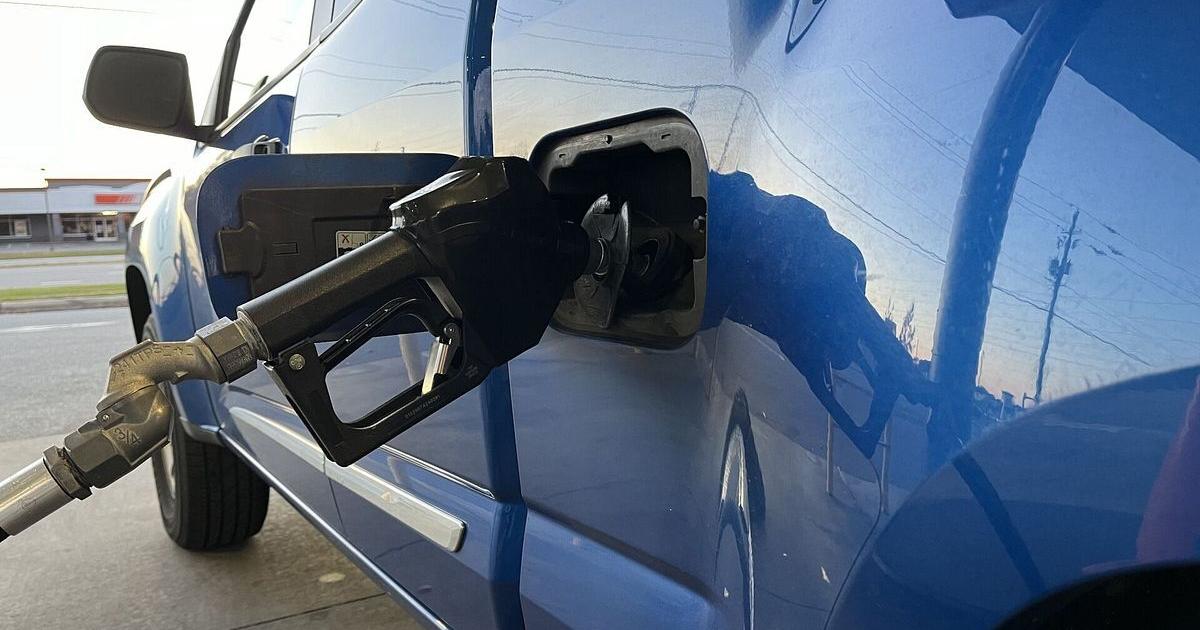
(The Center Square) – Trucking industry woes through state-record diesel prices continue to ripple through North Carolina, sacked by the price of a gallon of diesel fuel crossing $6 a gallon.
Voters are already marking ballots in the nation’s longest voting window and what is in their wallets and pocketbooks is overwhelmingly the top issue, according to a poll released Thursday by Elon University. The costs on average in North Carolina at the pumps are $6.02 for a gallon of diesel and $3.97 for a gallon of regular unleaded.
Nationally, motorists are paying $6.23 for diesel and $4.31 for gasoline.
From Murphy to Manteo the price increases since the first weekend in January are 77.6% for diesel and 52.1% for gasoline. Since Tuesday of last week, diesel is up 20 cents a gallon, gasoline 14 cents.
State and national prices for diesel are records, according to AAA. Gas records are $5.01 (set June 14, 2022) in North Carolina and $5.01 (set June 14, 2022) nationally.
This comes as prices have a chance to change significantly on Wednesday. Per Environmental Protection Agency rules, the time for less volatile summer blend fuel to be sold is June 1 to Sept. 15. In general, summer fuel is considered 10 cents to 15 cents higher per gallon.
The Center Square analyzes this market monthly, at a minimum, as part of its mission for reporting of government accountability, what taxpayers are spending and where, and how it translates for the businesses and communities throughout the state.
Diesel prices are crucial to the trucking industry of America, and hence, many consumer staples. Fuel prices have been a concern ahead of the 2026 midterm elections ever since Israel and America launched missile strikes into Iran on Feb. 28.
Declarations of victory, military action being complete, of ceasefire, and of the ceasefire ending have preceded multiple ups and downs in industry price trends. Before the conflict, the Strait of Hormuz – Iran is on its northern coast – had about 20% of the world’s oil passing through daily.
For North Carolina, the average on Jan. 5 was a calendar year low of $2.61 a gallon for unleaded. The price was $2.75 the day before Operation Epic Fury began; was $4.21 on May 6; and $3.48 on July 8.
Diesel was $3.39 a gallon at the beginning of the year; $5.81 on April 7; $5.50 on May 6; and $4.56 on July 8.
Events coinciding with dates are second-term Republican President Donald Trump declaring a double-sided ceasefire April 7; North Carolina having a 9-cent overnight rise in gas prices on May 6; and Trump declaring the ceasefire over and strikes resuming on July 8.
North Carolina’s electric vehicle charging rate average, according to AAA, is 41.2 cents per kilowatt-hour. The national average is 42.4 cents per kWh. More than 100,000 zero-emission vehicles are registered in the state. At the start of 2025, the state norm was 33.5 cents per kWh and the national was 34.7 cents per kWh.
Only 10 states have lower average prices for a gallon of unleaded; 18 are lower for diesel; and 20 plus the District of Columbia are lower in electric. Six states are above $5 a gallon for gasoline, led by California at $6; California ($8.15), Washington ($7.22) and Hawaii ($6.93) continue to top the diesel chart.
Among the 14 major metro areas in North Carolina, the least expensive average ($3.92) for unleaded gas is in both the Hickory-Lenoir-Morganton market and the Goldsboro market. The most expensive is the Asheville area at $4.01.
Diesel is the most consumer-friendly ($5.98) in the New Bern and Rocky Mount markets.
North Carolina’s 41.25 cents per gallon tax rate (taxes and fees) on gasoline for 2026 is only eclipsed by California (73.6), Indiana (64.5), Washington (60.17), Pennsylvania (58.7), Michigan (53.4), Illinois (49.6), New Jersey (49.15), Maryland (46.81) and Virginia (42.4).
Motor fuel taxes fund the North Carolina Department of Transportation’s highway and multi-modal projects, accounting for more than half of the state transportation resources. The revenues go into the Highway Fund and the Highway Trust Fund.
Managing Editor
This story originally appeared on thecentersquare.com.
Source: The Center Square

Related coverage
Weather
Quiet Atlantic hurricane season snaps 112-year-old record
Weather
Settlement halts mass grant, job terminations at AmeriCorps

News
Climate change is boosting landslide risks in southern Appalachia

Politics
Innovative digital teaching, learning supported in grants exceeding $1.2M

Crime & Safety
Forsyth County, NC Scam Warning: Do Not Pay Property Letters

Weather
North Carolina Storms Could Bring Damaging Winds

Weather
North Carolina Fall Starts Warm With Coastal Storms

Crime & Safety