
Space
Why red giant stars take a quick coffee break in their growth
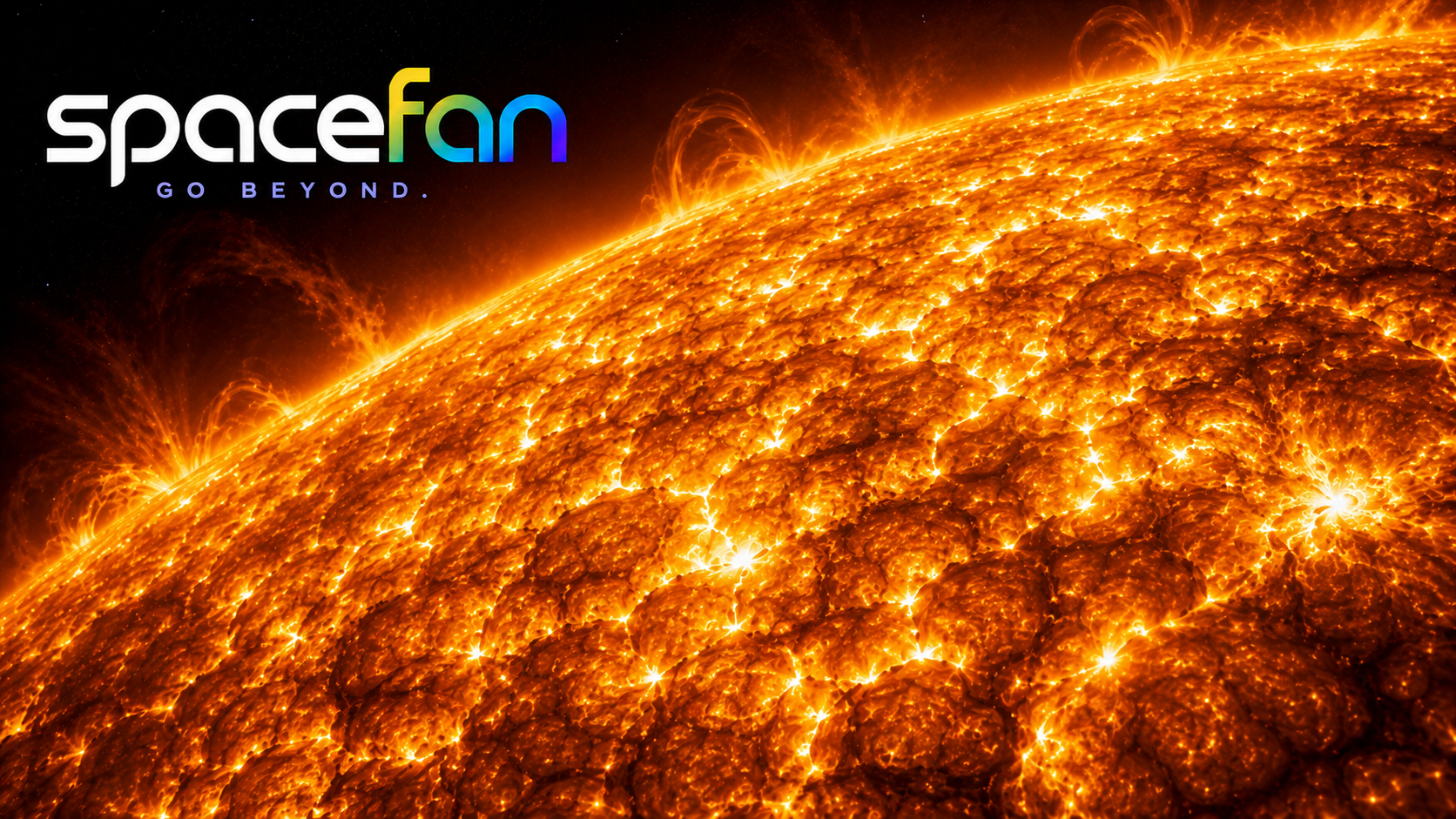
Close-up of the fiery Sun showing bright active regions and looping plasma above its surface.
Photo: Space.Fan

When stars like our own Sun eventually run out of fuel, they swell up into massive, glowing red giants. It is a predictable, slow-motion drama that has fascinated astronomers for decades, but there has always been a nagging mystery in the script. As these stars expand, they usually get brighter and cooler, but they often hit a strange 'luminosity bump'—a momentary pause where they stop brightening altogether. For years, our best computer simulations couldn't explain why this happened, leaving a frustrating gap between what we saw through our telescopes and what our math said should be happening.
A team of researchers led by S. Hekker at the Heidelberg Institute for Theoretical Studies has finally cracked the code, according to the study published in The Astrophysical Journal Letters. The key turns out to be a border deep inside the star where the chemical makeup shifts, known as a mean molecular weight discontinuity. As this internal boundary moves inward, it changes the balance of heat and pressure. When the ratio hits a specific tipping point, the energy in the star's outer layer drops. This invisible energy shift, or entropy, acts like a brake on the star's brightness, causing that peculiar bump we observe.
While this solves a long-standing headache for astrophysicists, the team notes that it is a significant step forward rather than the final word, as these complex models rely on assumptions about how heat and gas swirl deep inside a star's core. Still, being able to accurately predict this bump is a huge win. Because stars live for so long, we cannot watch one evolve in real-time; instead, we have to piece together their life stories like a giant cosmic puzzle. By fixing our models, we now have a more reliable way to date star clusters across the galaxy and better understand the epic lifecycles of the stars that light up our universe.
Source: Space.Fan